

Written by Ryan Hunter, Chief Operations Officer at QTS
How QTS data centers use closed-loop cooling to eliminate ongoing water use
QTS’s closed-loop cooling system only requires a one-time water fill to support data center operations. Unlike evaporative cooling systems, it recirculates the same water within the system, eliminating ongoing water demand for the purpose of cooling.
As new data centers are developed, questions have emerged about potential water use. While some facilities choose to rely on water-intensive cooling systems, QTS is designed to be different by choosing a technology and approach that is free of ongoing water consumption.
Why do data centers need cooling?
Cooling is fundamental to maintaining reliable data center performance. Servers generate heat during operation, and without effective cooling, systems can overheat, affecting customers’ operations and the digital services people depend on every day.
Many data centers continue to rely on evaporative cooling, which uses water to remove heat through evaporation. In these systems, water is continuously consumed and replaced as part of the cooling process.
What is closed-loop cooling, and how does it reduce water use?
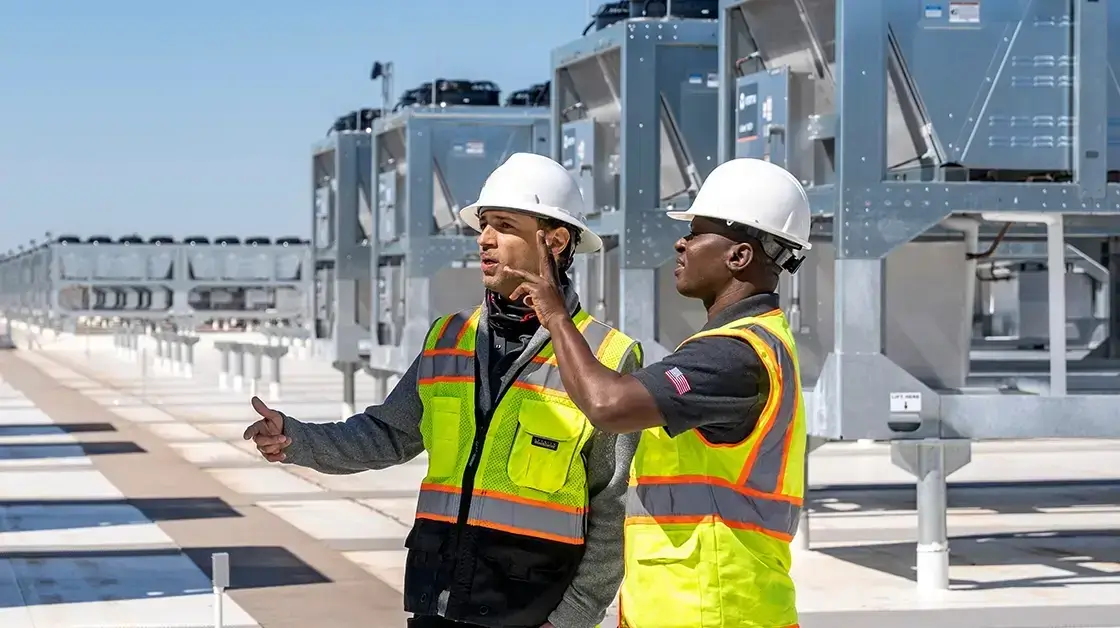
QTS’s closed-loop cooling system recirculates water within a sealed system, rather than consuming it through evaporation. After the initial system fill during construction, water remains in circulation for the life of the building. A simple comparison is the heat transfer that occurs in the radiator of a car. Liquid circulates through the system without ever evaporating, and air flows across the coil to remove heat; no water is consumed in the heat transfer process.
QTS’s closed-loop cooling design has been standard in QTS development since 2019 and continues to be implemented in all future builds as well.
The volume required for the initial system fill varies by building size and design, but is typically around 615,000 gallons, or about one Olympic-sized pool. Because this water is retained and reused within the system, QTS estimates its closed-loop cooling design in a typical building can avoid up to 300 million gallons of annual water use compared with traditional evaporative cooling systems.
How does QTS source water for the initial system fill?
Water used for the initial system fill is typically sourced from approved municipal supplies and must meet quality standards to support long-term system performance.
QTS works with local jurisdictions and utilities to align with applicable requirements and uses approved local water systems for initial fill needs. As part of QTS’s commitment to pay our own way, we fund any necessary upgrades (if required) to local water and sewer utilities as part of our development agreements.
Because the closed-loop system is not dependent on evaporation, it is less affected by seasonal conditions such as heat or humidity, helping eliminate sustained demand on local water resources over time.
How is water used during construction and operations?
While water is not consumed for ongoing cooling system operations, water is used during construction and for ongoing facility operations like all other commercial or industrial buildings.
- Construction: Water is used for activities such as dust control, concrete work and site preparation. Usage levels vary significantly by project, construction method and local conditions, and are temporary in nature, declining entirely once construction is complete.
- Operations: On average, a QTS data center building’s ongoing operational water use is primarily for standard office activities — such as drinking, cleaning and bathroom use. Excluding site-specific uses such as landscaping and irrigation, that usage is less than five U.S. households.
How does QTS continue improving water efficiency?
Water efficiency is a key priority for QTS. The ‘Water-Free Cooling Design’ is described as a data center with cooling equipment that, once operational, does not withdraw, consume or discharge water while cooling the data center. We achieve this by using a closed-loop cooling system.
QTS’s closed-loop cooling system only requires a one-time water fill to support data center operations. Unlike evaporative cooling systems, it recirculates the same water within the system, eliminating ongoing water demand for the purpose of cooling.
This approach reflects QTS’s broader commitment to responsible development design and long-term alignment with the communities where it operates.