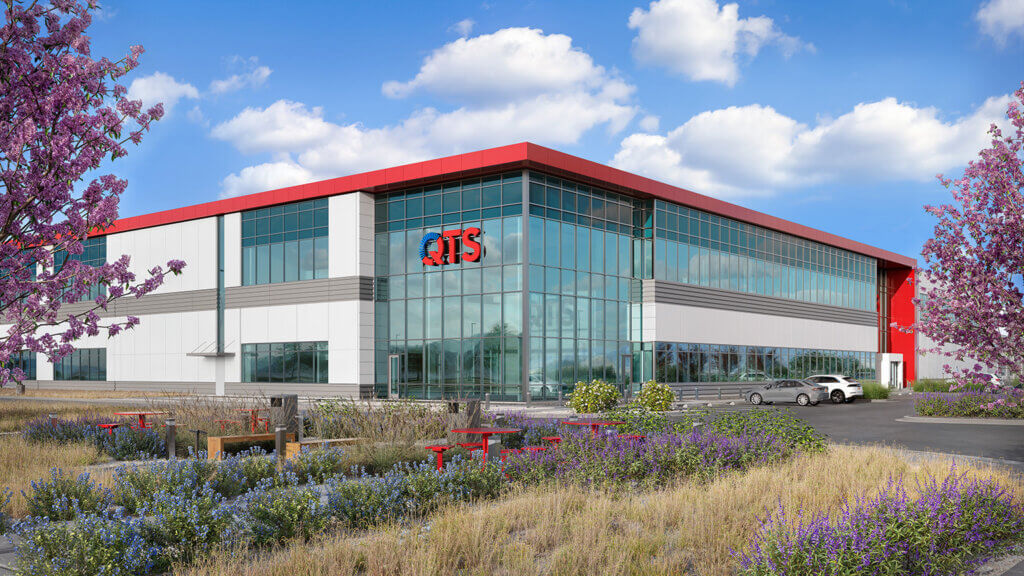
Data Center Campus
Our first data center campus in Utah will be located in Eagle Mountain City. This region is a fiber-rich data center area in the Intermountain West with low propensity for natural disasters.
WHY QTS
Data centers are essential for businesses, governments and organizations that rely on technology to operate and communicate. We are committed to providing job opportunities, fostering economic growth, working with local suppliers and operating as trusted neighbors and good stewards of community resources and the environment.
We anticipate bringing high-tech full-time jobs and hundreds of construction and trade jobs to Eagle Mountain City. We offer internship programs for undergrads, transitioning military members and programs to learn more about data centers.
We’ve established clear goals for reducing our carbon footprint, using a closed-loop cooling system, promoting clean energy and improving stakeholder wellbeing.
We are dedicated to enhancing the future prosperity of the Eagle Mountain community, the environment and business landscape by supporting local organizations to meet the needs of the community.

As a conscientious, purpose-driven organization, we listen and engage the community with our best-in-class standards for site development, construction and operations.
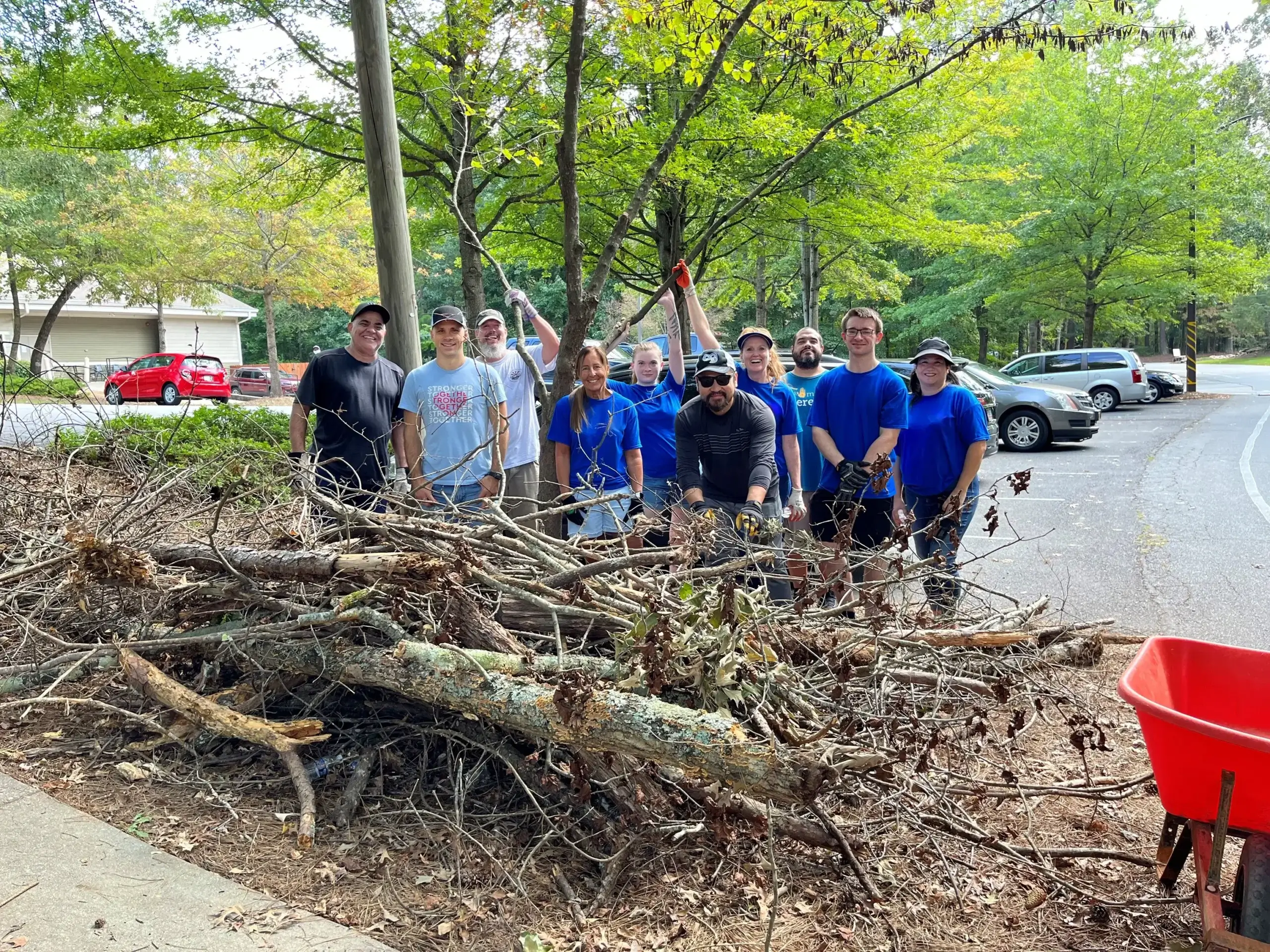
Our company and employees donate time, technology and resources to support local programs and agencies. We are committed to improving communities and changing lives.
A data center is a purpose-built building that stores a large amount of digital data. This data – and the applications used to create, process and share it – is housed in servers that reside within the data center. Data centers are vital hubs for businesses, governments and organizations that rely on technology.
There are many factors that QTS considers when looking at locations for data center development. Data centers require access to power, connectivity and a skilled workforce that not everywhere can provide. Another important factor is existing infrastructure and appropriate zoning that can support data center development, both of which this area already has established. Having zoning and infrastructure already in place significantly minimizes environmental and community disruption which is why we considered this site.
QTS Data Centers is investing in the future of Utah County by developing a data center campus in the Eagle Mountain. During the first phase, we expect to build five data center buildings across approximately 193 acres with plans for expansion over the next 5 years.
An initial site plan for the first phase (pictured) is included below. Please note, the rendering below is for concept only.
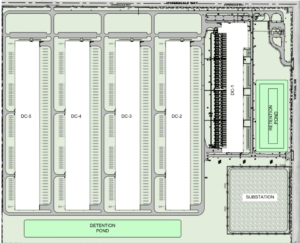
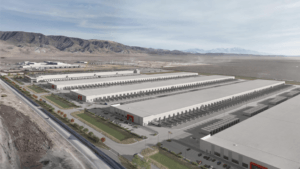
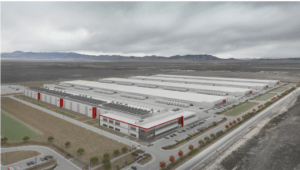
In the first phase, the largest building is 592K square feet and the smallest building is 579K square feet.
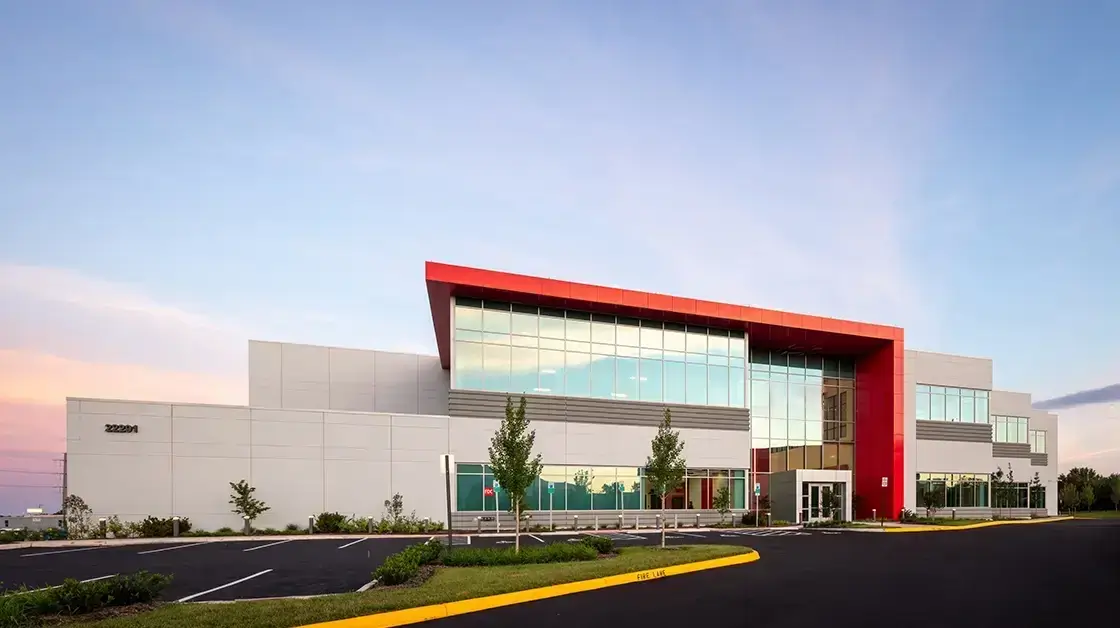
We take pride in constructing buildings with aesthetic appeal in the communities where we operate. We have a track record of working with local communities to ensure our buildings meet local design standards.
Although we are still in the early planning stages, we plan to minimize visual impacts on neighboring properties through substantial buffers and setbacks. We will incorporate buffer screens to conceal equipment from view and utilize landscaping techniques such as berms to enhance aesthetics.
QTS plans for long‑term operations in Eagle Mountain and designs campuses to allow for future growth. That said, we don’t have additional expansion details to share at this time. Any future development would follow applicable approvals and include continued engagement with the city and local community.
This project represents a $6 billion QTS investment that will have a transformative impact on Eagle Mountain, supporting its growth and development.
It will support more than 2,000 construction jobs and around 100 permanent positions that includes QTS, tenant and contractors.
We estimate the project will generate millions in local tax revenue annually once the project is fully built out and operational, creating an opportunity to reduce tax burden for residents and support services and community programs throughout Utah County.
This investment reflects our belief that responsible growth means shared prosperity for the communities where we live, operate and raise our families.
We estimate around 2,000 construction jobs and 100 permanent jobs that include QTS, our tenants, and jobs tied to campus operations such as maintenance.
Beyond construction, data centers employ a wide range of onsite jobs across operations, project management, procurement, logistics, security and maintenance/technology.
Skillsets range from technical (electrical, mechanical, IT certifications) to administrative and security. Importantly, our Data Center Academy program provides paid training for individuals with no prior experience, creating a pathway to become a Critical Operations Technician.
We typically pay an average of $80,000 for an annual salary for a Data Center Technician.
We do not have a specific percentage goal; however, we will prioritize local hiring wherever possible. Through partnerships with local schools, technical colleges, and workforce programs, we aim for a significant portion of roles to be filled by residents.
We understand why people are interested in the power needs of this project. What we can share is that the facilities are designed to operate within the existing planning, regulatory and utility requirements for the area. We are working directly with local utilities to ensure that our power needs do not impact the reliability of service for homes or businesses in Eagle Mountain and the surrounding areas.
While we don’t disclose specific power capacity for security and confidentiality reasons, we can reassure the community that the project has gone through the appropriate reviews, and the local grid has confirmed it can reliably support the site. As the project develops, we remain committed to ongoing dialogue with the community and local leaders.
QTS will pay for all project energy infrastructure and there will be no cost impact to existing Rocky Mountain Power customers as a result.
QTS aspires to source the maximum amount of carbon-free energy. In 2024, QTS achieved full utilization of carbon-free operational electricity across our facilities. We work closely with utility companies to identify innovative and sustainable ways to best serve the communities in which we operate in and the environment.
QTS data centers are built with a closed-loop cooling system that does not consume water for cooling, once operational. Because our cooling technology uses a closed-loop system, there will be no impact to water supply in Utah County.
Once the cooling system is up and running, Eagle Mountain City water will only be used for everyday building needs – like bathrooms, kitchens, cleaning and landscaping – just like any other commercial building. An average facility typically uses less than average water use by industrial standards, using about 50,000 gallons a month for humidification and domestic use, such as bathrooms and kitchens. This is comparable to the monthly water use of under five average households.
The closed-loop system that cools the data hall uses only water. We will need to initially charge the system with a one-time fill. The initial charge varies based on building design, however for a standard building, the initial charge is about 600,000 gallons. While that one time fill is needed upfront, this design can save about 300 million gallons of water over the course of a year compared to traditional cooling approaches. Under normal operation, the initial charge is intended to remain in the system indefinitely, supported by routine maintenance and leak detection.
Since we’re still early in the planning stage for this development, it’s hard to predict the exact amount of water needed.
We’re currently in discussions with Eagle Mountain City to identify the best solutions to support the initial fill.
Based on a review conducted by a third‑party environmental consultant, there are no wetlands located on the project site, and there are no federally protected wildlife habitats in or near the area.
Specifically:
We are committed to responsible development and will continue to follow all applicable environmental regulations throughout the project.
Diesel generators are used for emergency backup purposes only and are not the main source of power for our data centers. Generators are tested once a month for a short period of time for routine maintenance. Our diesel storage tanks are double-walled and equipped with interstitial leak monitoring and containment systems to minimize noise and ensure environmental protection. Additionally, our generators come equipped with high-efficiency filters to protect air quality and reduce emissions. These filters help minimize air pollutants and noise levels to keep the community safe in the limited cases that backup generators are needed.
QTS will apply for an air permit to the Department of Natural Resources (DNR). The DNR is the delegated permitting and enforcement arm, from the US EPA under the Clean Air Act, to ensure that air pollution is within acceptable levels.
Any equipment that QTS uses, we recycle. In most cases, old electronics are typically used to build new component parts. We encourage our tenants to participate in a similar recycling plan.
A common misconception is that living near a data center poses increased health risks due to radiation. All buildings regardless of usage and occupancy emit electromagnetic radiation. In fact, data centers emit levels of electromagnetic radiation comparable to those of standard commercial or residential buildings. Extensive research has been conducted, and no evidence has been found to conclude that exposure to low-level electromagnetic fields is harmful to health.
Our data centers are designed not to exceed permissible noise levels, and we implement a variety of sound mitigation strategies, including equipment enclosures, sound barriers and strategic grading and site layouts fit for each development.
QTS data center buildings are constructed to meet or exceed green building standards, which includes responsible lighting design. The lighting strategy will mitigate impact to wildlife and natural areas by implementing special lighting techniques. These include using directional lighting pointed downward and covered to reduce light pollution, lower wattage and brightness levels, motion sensors and automatic systems to avoid unnecessary lighting and landscaping to minimize light impact. All lighting plans will meet local and state code requirements.
During the first phase, QTS plans to build five data center buildings across approximately 193 acres. Construction of Buildings 1, 2, and 3 is currently underway and expected to be completed by the end of the year. Buildings 4 and 5 will be constructed as part of this initial phase, with completion anticipated over the following several years.
The timing of future phases will depend on permitting, approvals, and market demand.
Noise is anticipated during construction, and QTS is continuing to work closely with Eagle Mountain City on allowed construction hours. As construction progresses, work schedules may vary by phase and may include evening, overnight, or weekend activity. QTS will coordinate closely with the City and our construction partners and will continue to take steps to minimize impacts to nearby residents.
During construction, we will work with our partners to implement a variety of practices to minimize dust, including applying temporary paving to construction roads, logistic areas and workforce parking areas; routinely watering down active work areas and haul roads; covering or stabilizing soil and material piles when they are not in use; limiting vehicle speeds on unpaved surfaces and using designated haul routes to reduce dust generation. These steps help ensure compliance with local regulations and we will monitor the conditions daily based on weather conditions and activity levels.
QTS is committed to minimizing impacts on local infrastructure and ensuring safe travel for residents throughout the development of the project. In an effort to minimize impact, we plan to do the following:
QTS will take responsibility for restoring roads impacted by our construction activities to meet or exceed pre-construction conditions.
While data centers are critical infrastructure, they are among the most secure and reliable facilities in technology.
QTS data centers are designed with multiple layers of physical, technical and environmental security controls including biometric access controls, 24/7 surveillance and advanced cybersecurity protocols.
QTS data centers use high-security fencing, often 8 to 12 feet tall. This fencing is made of steel and sometimes topped with barbed wire for added protection.
Yes. Entry points are limited and secured with gates controlled by badge access, biometric systems and security personnel.
The Unified Fire Authority and Utah County Sheriff’s Office will be the primary responders for emergencies at the proposed facility. If the project moves forward, we will partner with the department to ensure they have the training, equipment and resources needed to respond effectively to an emergency and protect the community.
Data centers are built for long-term use and are designed to evolve with technology. While the physical structure remains durable and well-maintained, the internal systems (servers, cooling, electrical) are upgraded to keep pace with innovation and efficiency standards.
The QTS approach is modular and scalable, meaning we can integrate new technologies without major reconstruction. This ensures the facility stays operational for decades.
We are currently engaging with several community organizations to determine how we can best support the needs of the Eagle Mountain community. Our community impact work is guided by our commitment to generosity of time, talent and resources to impactful organizations in your community. We are eager to connect!
We will continue to work closely with Eagle Mountain City, Utah County and state agencies as the project moves through the development process.
We will share updates and maintain open communication with local leaders, residents and community partners as the project advances.
For additional updates, resources and information about the of the QTS Data Center project, please visit https://q.com/data-centers/eagle-mountain/
We understand that projects of this scale raise important questions and concerns, and we take them seriously. We’re committed to providing clear, timely updates through our FAQ page and ongoing communications.
Residents can reach us anytime via [email protected], our website comment form, or at upcoming community events.
Campus Size
Development Scope
QTS Investment
Construction Jobs
Permanent Jobs
QTS is powered by people who are here for you. Stay tuned for updates on development.
Becoming one of the fastest growing data center companies was no accident. Our innovative thinkers are the go-to sources for the latest information in data service space.