TUUSULA, FINLAND
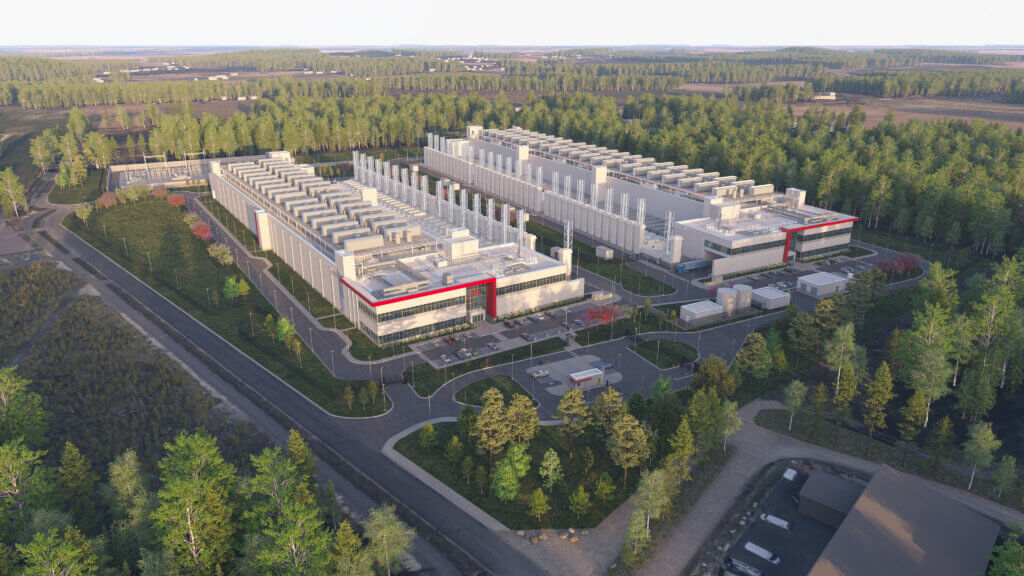
QTS is progressing plans for a new data centre campus near Jokela in Tuusula, Finland.
As demand for digital services, cloud computing and AI continues to grow, data centres provide the secure infrastructure that keeps businesses, public services and communities connected. The proposed Tuusula campus would support Finland’s growing digital economy while creating opportunities for local investment, employment and community partnerships.
The proposed Tuusula campus is part of the infrastructure that supports the digital services people use every day, from healthcare and banking to cloud computing, education and artificial intelligence.
QTS is committed to developing the project responsibly and transparently. We understand local residents may have questions about how the project could affect the surrounding area, and those topics are being carefully reviewed through the Environmental Impact Assessment (EIA), permitting and consultation processes.
Throughout project development, QTS will continue sharing information, listening to feedback and working closely with local stakeholders and regulatory authorities.
The information on this page reflects the current project concept and is intended for general information purposes only. Project details remain subject to design development, environmental assessment, consultation, regulatory approvals, power availability and customer requirements.
Location
Site Area
Campus Concept
Up to
Building Configuration
Development Approach
Current Status
All figures reflect the current project concept and may change as planning, permitting and design activities progress.
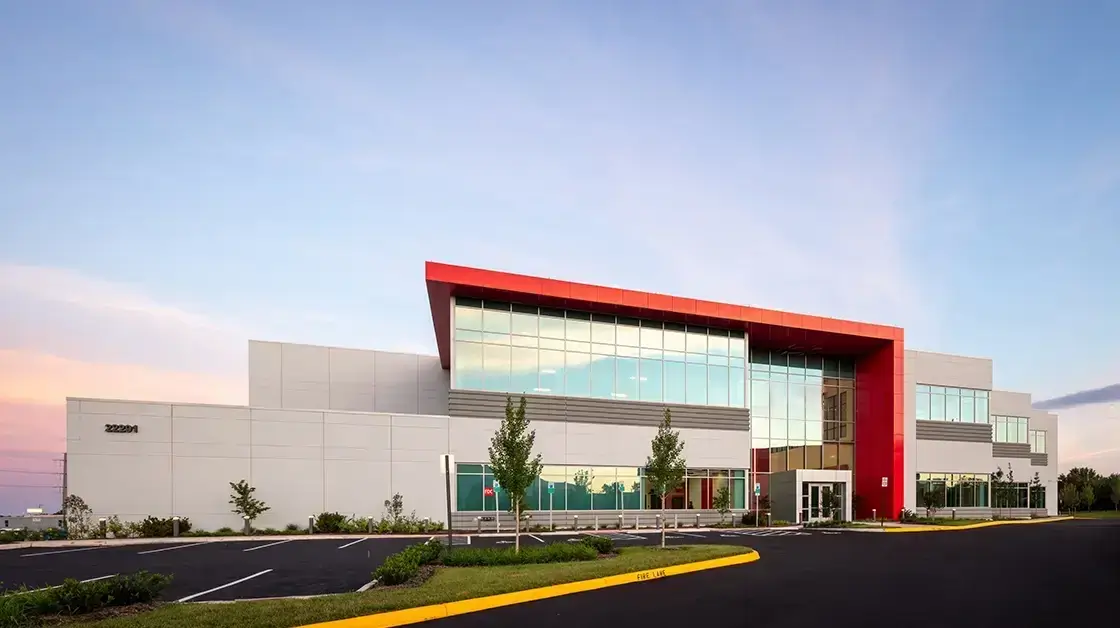
The proposed development would create a data centre campus within Tuusula Municipality near Jokela. The current concept covers approximately 16.8 hectares and includes two data centre buildings with planned IT capacity of up to 96 MW.
The current design consists of one 54 MW building and one 42 MW building supported by associated infrastructure including a substation, guard house, fire suppression facilities, attenuation ponds, landscape works and utilities.
The site was identified based on its location, connectivity opportunities, access, infrastructure potential and suitability for long-term digital infrastructure development. Development would occur in phases, with timing and scope dependent on planning approvals, infrastructure availability, customer requirements and ongoing design development.
Benefits
Large-scale digital infrastructure projects create economic activity during both construction and operation. The proposed campus would provide opportunities for local workers, businesses and suppliers while contributing to Finland’s growing digital economy.
The project has the potential to support several hundred construction jobs over the course of development and approximately 100 direct operational positions once the campus is fully operational.
Opportunities may exist for contractors, suppliers, service providers and specialist trades during both construction and long-term operations.
Subject to final project scope and applicable tax frameworks, the development is expected to contribute to the local tax base through property-related taxes and broader economic activity.
QTS will explore opportunities to collaborate with local partners on workforce development, apprenticeships, training initiatives, educational partnerships and community programs.
Employment, tax and economic benefits are preliminary estimates based on the current project concept. Actual outcomes will depend on project scope, phasing, procurement approaches, customer requirements and operational needs.
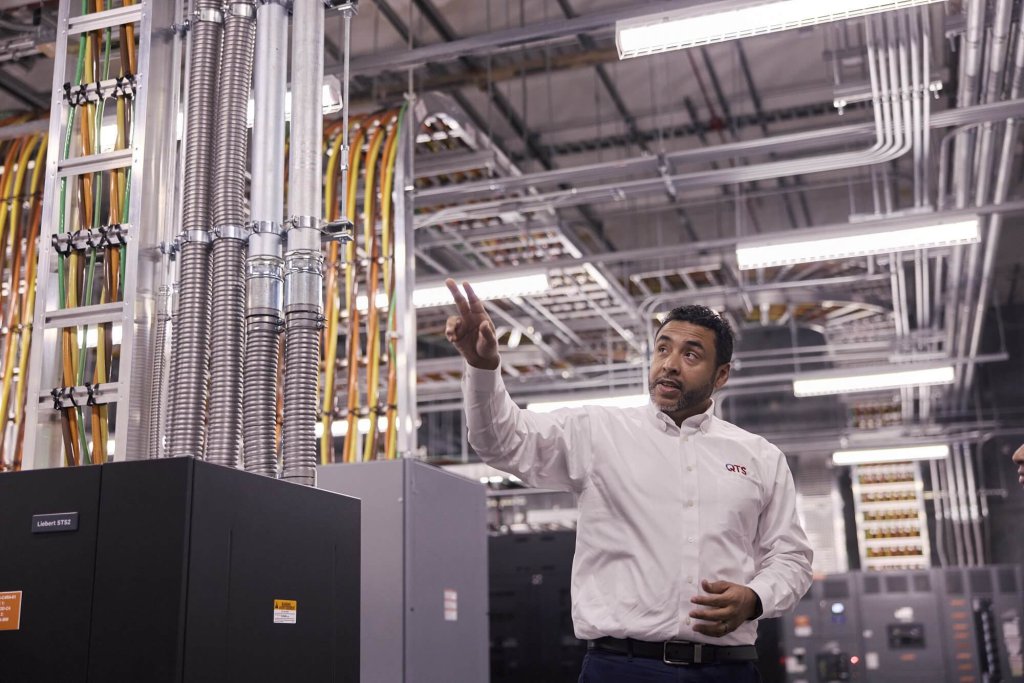
For more than 20 years, QTS has designed, built and operated secure, resilient data centre facilities that support many of the world’s leading technology, enterprise and government organizations.
Today, QTS operates and develops more than 100 data centres across the United States and Europe. As a Blackstone portfolio company, QTS combines global experience with local teams that focus on responsible development, operational excellence and meaningful community engagement.
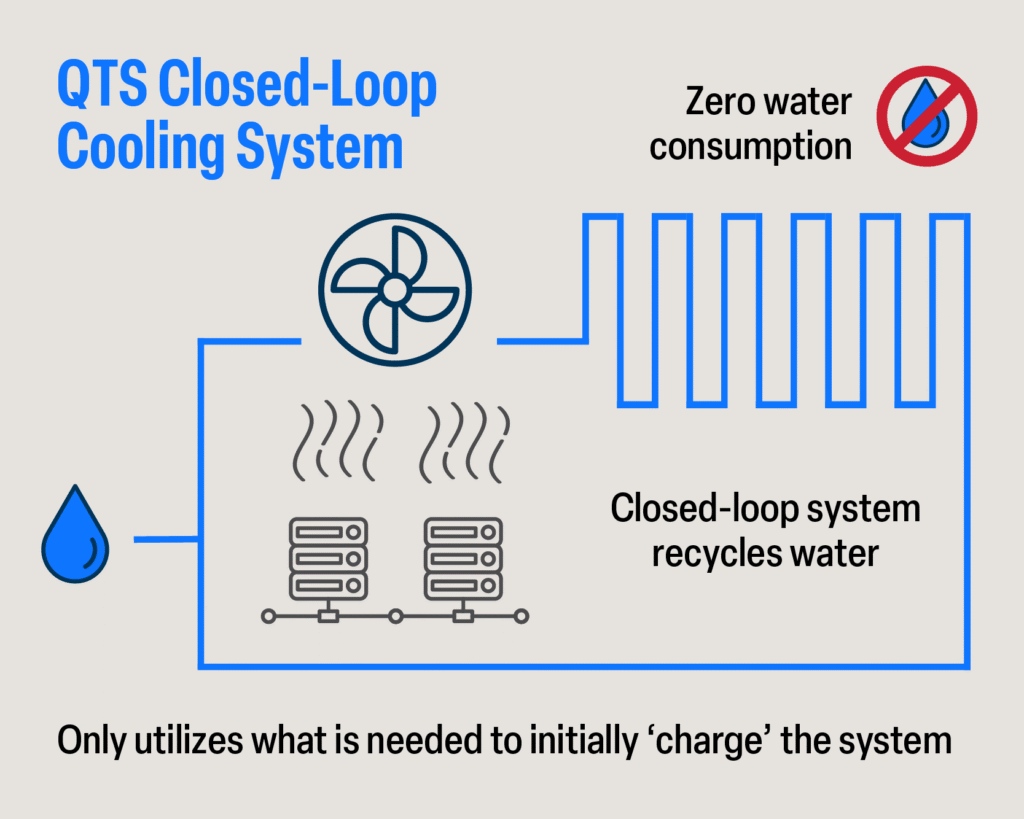
The current design includes a closed-loop cooling system using air-cooled chillers.
The system requires a one-time water fill and then continuously recirculates that water within the cooling loop. Under normal operating conditions, the cooling system is designed to operate without ongoing water consumption for cooling.
Once operational, municipal water would primarily be used for standard building functions such as bathrooms, kitchens, cleaning and humidification.
QTS will cover the full cost of the energy required to support facility operations, including any infrastructure upgrades necessary to serve the project.
QTS will work closely with utility providers and infrastructure partners throughout project development to plan for the campus’s future energy needs.
QTS recognizes that waste-heat reuse is an important local consideration.
The cooling system is being designed to remain compatible with future waste-heat recovery opportunities while discussions continue with relevant stakeholders.
Groundwater resources and nearby residential wells have been evaluated as part of the assessment process.
The assessment found that the project is not expected to require permanent lowering of groundwater levels or create significant long-term impacts on groundwater resources.
The Päijänne Tunnel was also considered during the assessment. The proposed site is located outside the tunnel protection area.
Noise modelling has been completed for normal operations, routine generator testing and emergency situations.
With planned mitigation measures such as acoustic attenuation and silencers in place, the facility is expected to operate within applicable environmental noise guidelines.
Lighting will be designed to provide safe and secure operations while minimizing light beyond the site boundary.
Existing woodland and natural landforms already help limit visibility from surrounding areas.
Normal data centre operations do not produce air emissions.
Emissions occur only during backup generator operation and are expected to remain within applicable regulatory limits.
Environmental impacts continue to be reviewed through the EIA process and supporting technical studies.
Engineering, infrastructure planning and technical evaluations will continue as the project evolves.
The project must complete applicable planning, permitting and regulatory approval processes before construction can begin.
Environmental impacts continue to be reviewed through the EIA process and supporting technical studies.
Engineering, infrastructure planning and technical evaluations will continue as the project evolves.
The project must complete applicable planning, permitting and regulatory approval processes before construction can begin.
Safety is central to the design, construction and operation of every QTS facility.
QTS will continue working closely with municipal officials, permitting authorities and local emergency services to help ensure emergency access, fire protection systems, operational procedures and building design meet all applicable requirements.
A data centre is a secure facility that stores and processes digital information for everyday services such as banking, healthcare, communications, cloud services, AI tools and business applications.
QTS, a Blackstone portfolio company, is expected to develop and operate the proposed campus, subject to approvals and project requirements.
The current concept covers approximately 16.8 hectares, subject to change as studies, design and planning progress.
The current campus concept comprises two data centre buildings. The number, size and layout of buildings remain subject to design development, environmental assessment, consultation and regulatory approvals.
The current concept includes planned IT capacity of up to 96 MW across two buildings: one 54 MW building and one 42 MW building. Final capacity and delivery phasing will depend on planning approvals, power availability, customer demand and design development.
Development will occur in phases. The timing and scope of individual phases will depend on planning approvals, infrastructure availability and customer requirements.
QTS develops and operates secure data centre infrastructure for leading cloud, technology, enterprise and public-sector customers. While QTS cannot comment on specific customer or tenant discussions, the facility is being designed to support high-quality digital infrastructure needs, including cloud, AI, business-critical systems and everyday digital services used across Finland and Europe.
The project is progressing through the EIA process, design development and permitting activities. Project details will continue to evolve as technical studies are completed, stakeholder feedback is considered and regulatory processes progress.
The current design includes a closed-loop cooling system with air-cooled chillers designed to operate without consuming water for cooling during normal operating conditions.
QTS is assessing opportunities for waste-heat reuse where technically and commercially feasible. The project’s cooling system is being designed to be compatible with waste-heat recovery, but no final solution has been confirmed.
QTS will cover the full cost of the energy needed to serve the facility, including any grid infrastructure upgrades required for the project. Those costs will not be passed on to local customers.
There are no air emissions from normal data centre operations. Emissions are only released during the operation of backup generators. Air quality was assessed for the backup power systems under a range of possible operating scenarios, and emissions from routine testing and normal operations are expected to remain within regulatory limits.
While it is too early to confirm exact figures, QTS expects the project to support several hundred construction jobs over the course of development and around 100 direct jobs once operational, alongside wider indirect opportunities through local contractors, suppliers and service providers. The final scale and timing of these opportunities will depend on project scope, phasing, customer requirements, procurement and operational needs.
QTS’ preference is to reach voluntary agreements with landowners wherever possible, and QTS will continue to work transparently and respectfully with the Municipality of Tuusula, affected landowners and relevant authorities. Any land acquisition process would follow Finnish law and all applicable municipal and national procedures, including statutory safeguards, compensation requirements and rights of appeal.
During construction, there will be temporary increases in traffic, activity and noise, as is common with major infrastructure projects. QTS will plan and manage construction carefully, including traffic routes, site logistics and working practices, to reduce disruption wherever possible.
Yes. QTS is committed to being a responsible long-term neighbour and expects to establish clear channels for local residents and stakeholders to raise questions or concerns as the project moves toward operation, which may include a dedicated contact point or complaints process.
Noise has been modelled for everyday operations, backup generator testing and emergency situations. With planned noise-reduction measures in place, the site is expected to operate within relevant environmental noise guidelines. QTS will also monitor noise at nearby sensitive receptors.
Groundwater has been reviewed carefully, including potential effects on nearby residential wells. The assessment found that the project will not require permanent lowering of groundwater levels and is not expected to cause significant long-term impacts on groundwater resources. During major earthworks, there may be a temporary increase in groundwater cloudiness, but this can be managed through construction controls and monitoring.
The assessment looked closely at groundwater protection and the Päijänne Tunnel. The proposed data centre site sits outside the tunnel protection area, and the assessment found that the risk of significant impacts from accidents or incidents would be low. Any future transmission infrastructure will go through further detailed design, assessment and permitting before anything is built.
Lighting is being designed to keep the site safe and secure while limiting light beyond the site boundary. Existing woodland and natural landforms already help reduce visibility from surrounding areas, and QTS will use modern controls and directional lighting to help avoid glare and unnecessary spill into neighbouring areas. The project’s appearance in the local landscape has also been assessed using modelling and visualisations.
Safety is central to the design, construction and operation of every QTS facility. QTS is working, and will continue to work, closely with the Municipality of Tuusula, relevant permitting authorities and the local fire department throughout the design and permitting process to ensure emergency access, fire safety systems, operational procedures and building design meet all applicable requirements.
We are committed to sharing clear information, engaging openly and listening to questions from residents, businesses and local stakeholders.
As the project progresses, additional project updates, engagement opportunities and contact information will be made available through this page.
Important Information
The information provided on this website reflects the current project concept and is intended for general information purposes only.
Project details remain subject to change, including site area, building configuration, IT capacity, investment, design, construction programme, environmental measures and economic benefits. Any future development remains subject to planning approvals, environmental assessment, permitting requirements, power availability, customer demand, commercial considerations and final design.
References to potential investment, employment, economic benefits or other future outcomes should not be interpreted as commitments or guarantees.