Data Center development
QTS is developing a data center facility on Lancium’s Clean Campus near Turkey, TX. We look forward to working side‑by‑side with local leaders, organizations and residents to build strong partnerships and support the community.
Upcoming event
August 13 | 5:30-7:00 p.m.
Location:
Valley School Auditorium
11826 Hwy 86 Turkey TX 79261
Join us at Valley School on August 13 from 5:30-7:00 p.m. for a community event where you can ask questions, learn about job opportunities and meet the QTS team.
Data centers are the backbone of our modern, digitally connected world. These specialized facilities house thousands of servers that store, manage and connect vast amounts of digital information. They power the essential applications and services that support every facet of our lives, from healthcare and education to financial services. we’re proud to bring this work to West Texas, and we’re committed to building the right way.
WHY QTS
We believe how we deliver our data centers is just as important as what we deliver. For Hall County, that means taking a responsible, community‑first approach that considers local priorities, protects shared resources and contributes lasting value.

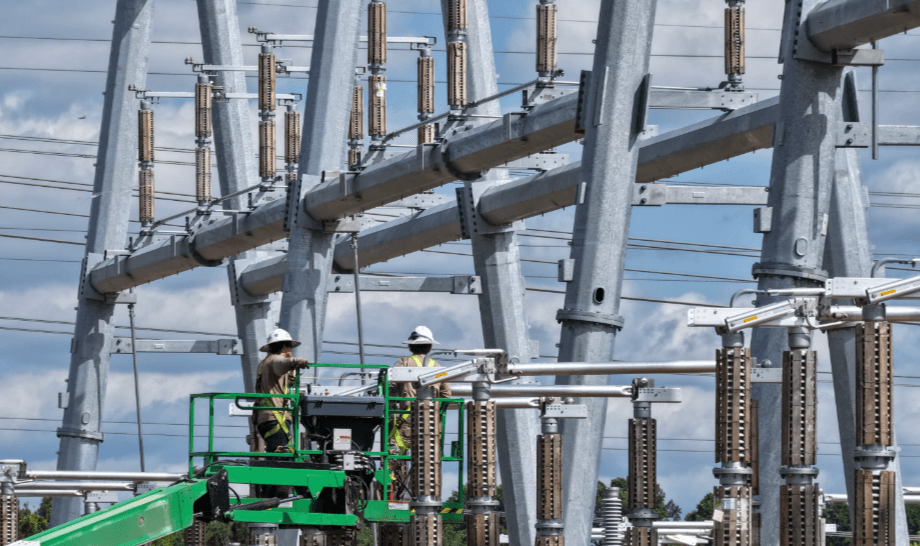
Lancium and QTS will fund 100% of the energy infrastructure improvements necessary to support the campus. All improvements are designed to support the project and modernize the grid to enhance and support reliable service for existing customers.

As industry leaders in water preservation, we’re proud to save billions of gallons of water annually. Our closed looped cooling system is designed to be different. We charge it once with water and then it doesn’t consume anymore water for cooling.

We create good-paying jobs for local residents and partner with local businesses. This includes both construction jobs during development and long‑term roles once the facility is operational, with a focus on hiring locally whenever possible.

Our commitment to community doesn’t stop at the data center doors. We invest in the places we call home, generating long-term tax revenue that helps fund local priorities such as schools, infrastructure and local services identified by the community.

We believe in being open and honest. We will listen to your questions and share updates on our progress while working together to make decisions that matter. As plans move forward, we will share updates through this page and other community channels to keep residents informed.
QTS announced plans to invest $250 million in Texas water infrastructure, conservation and community-focused water projects over the next 10 years, reinforcing its commitment to responsible growth and long-term water stewardship across the state.
A data center is a purpose-built building that stores a large amount of digital data. This data – and the applications used to create, process and share it – is housed in servers that reside within the data center. Data centers are vital hubs for businesses, governments and organizations that rely on technology.
There are many factors that QTS considers when looking at locations for data center development. Data centers require access to power, connectivity and a skilled workforce that not everywhere can provide. Another important factor is existing infrastructure that can support data center development, which this area already has established. Having infrastructure already in place significantly minimizes environmental and community disruption which is why we considered this site.
In addition to critical infrastructure already being in place, we believe construction jobs are important to be considered when assessing the total benefit of the project. Hall County is home to an incredibly strong construction force that is excited for the opportunity to work in their communities.
QTS Data Centers is investing in the future of Hall County with a proposed data center campus in Turkey. We expect to build up to 11 data center buildings across approximately 465 acres.
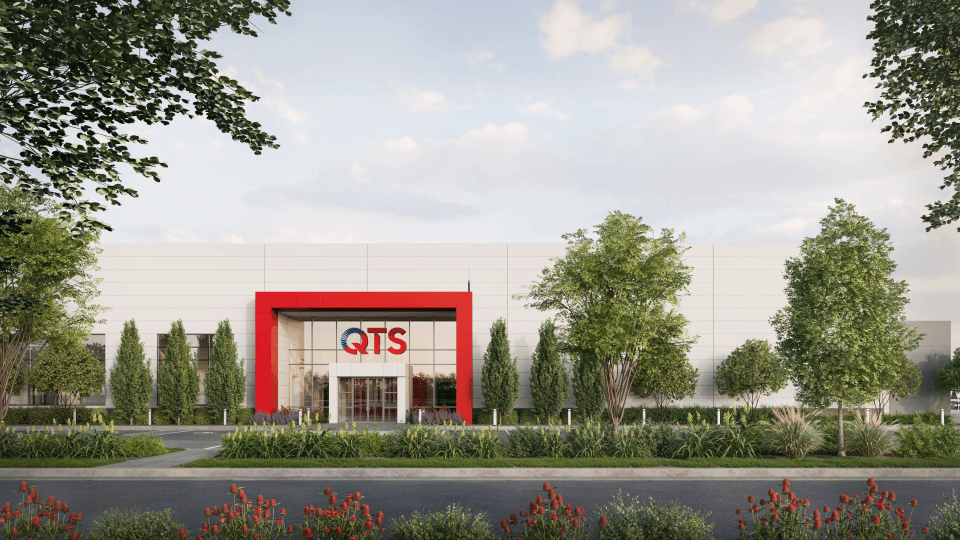
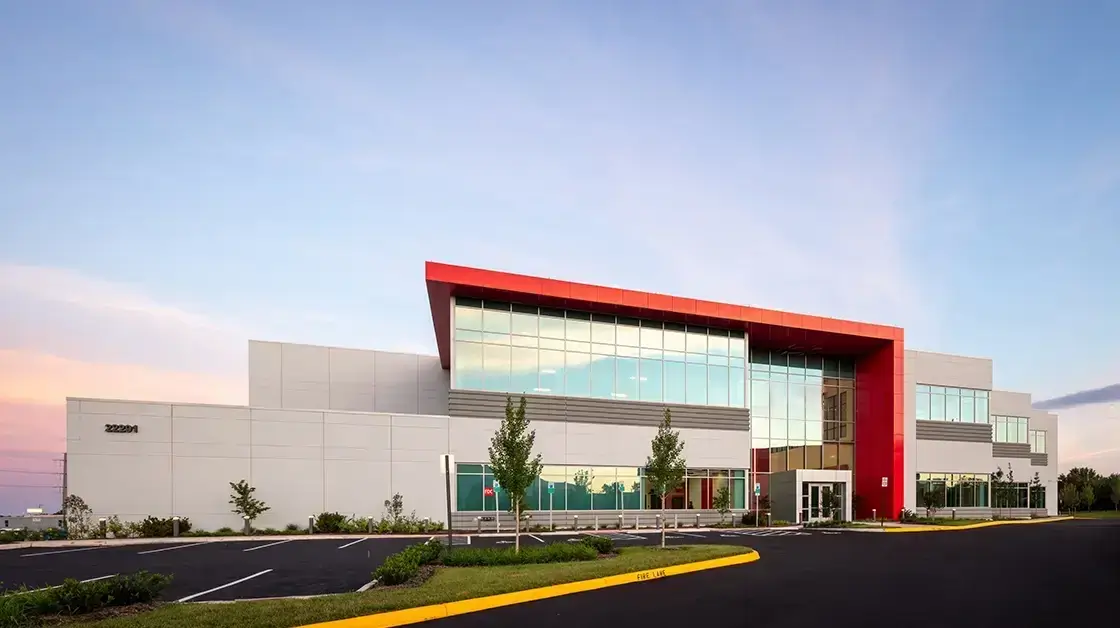
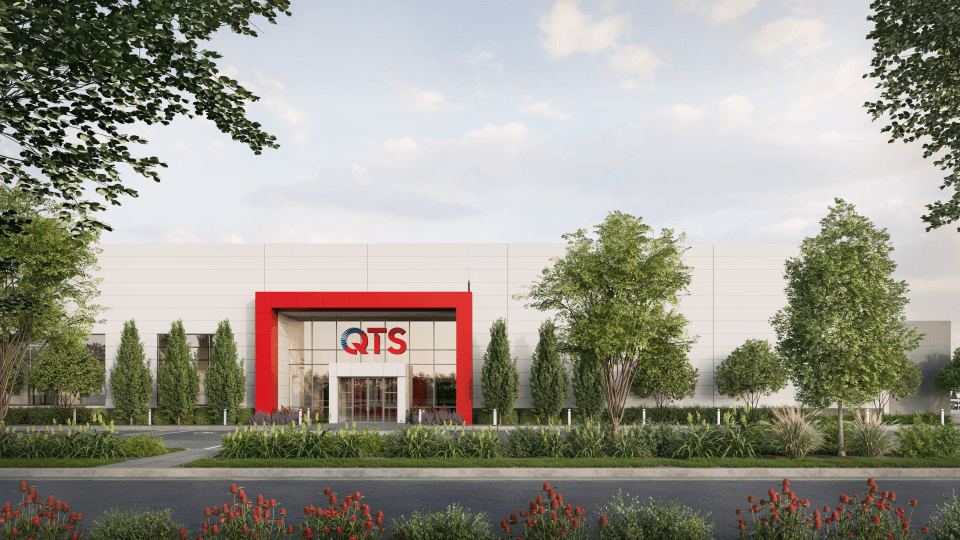
We take pride in constructing buildings with aesthetic appeal in the communities where we operate. We have a track record of working with local communities to ensure our buildings meet local design standards.
Although we are still in the early planning stages, we plan to minimize visual impacts on neighboring properties through substantial buffers and setbacks. We will incorporate buffer screens to conceal equipment from view and utilize landscaping techniques such as berms to enhance aesthetics.
QTS expects to invest more than $10 billion in Hall County and the City of Turkey, bringing long-term economic benefits that support local growth, development and community priorities.
It is expected to create hundreds of construction jobs and hundreds of full-time positions, supporting local families and businesses and partnering with local building trades unions.
We estimate the project will generate millions in local tax revenue annually once the project is fully built out and operational, creating an opportunity to reduce tax burden for residents and support services and community programs throughout Hall County.
This investment reflects our belief that responsible growth means shared prosperity for the communities where we live, operate and raise our families.
We estimate 6,000-7,000 construction jobs at peak construction and 350 permanent jobs will be created during the development and operation of this data center campus.
The 350 permanent jobs expected to be created by the campus include QTS employees as well as roles needed to support long-term operations, such as maintenance, security and tenant positions. These numbers are projections based on similar projects and may evolve as the campus is developed.
Beyond construction, data centers employ a wide range of onsite jobs across operations, project management, procurement, logistics, security and maintenance/technology.
Skillsets range from technical (electrical, mechanical, IT certifications) to administrative and security. Importantly, our Data Center Academy program provides paid training for individuals with no prior experience, creating a pathway to become a Critical Operations Technician.
We do not have a specific percentage goal; however, we will prioritize local hiring wherever possible. Through partnerships with local schools, technical colleges, and workforce programs, we aim for a significant portion of roles to be filled by residents.
Research shows that data centers can support long-term residential property values by strengthening local tax bases and improving school quality.
Data centers contribute millions of dollars each year in local property tax revenue while placing no additional demand on public schools. This creates what researchers call a “School Premium” effect—a fiscal surplus that allows communities to invest more in schools without raising residential taxes.
Because school district quality is the single strongest driver of home values in the U.S., these investments matter. Additional funding can support school facility upgrades, higher teacher pay, stronger academic programs, and improved school ratings—all of which make neighborhoods more desirable places to live.
In many communities, data center tax revenue has also helped stabilize or reduce residential tax rates, further supporting homeowner affordability and long-term value. By acting as a fiscal anchor for communities and helping fund high-performing schools, data centers help create the economic conditions that support stable and appreciating residential property values over time.
Lancium and QTS will fund 100% of the energy infrastructure improvements necessary to support the campus. All improvements are designed to support the project and modernize the grid to enhance and support reliable service for existing customers.
QTS data centers are built with a closed-loop cooling system that does not consume water for cooling, once operational.
Once the cooling system is up and running, water will only be used for everyday building needs – like bathrooms, kitchens, cleaning and landscaping – just like any other commercial building. An average facility typically uses less than average water use by industrial standards, using about 50,000 gallons a month for humidification and domestic use, such as bathrooms and kitchens. This is about what 4 households use a month.
The closed-loop system that cools the data hall uses only water. We will need to initially charge the system with a one-time fill. The initial charge varies based on building design, however for a standard building, the initial charge is about 600,000 gallons. While that one time fill is needed upfront, this design can save about 300 million gallons of water over the course of a year compared to traditional cooling approaches. Under normal operation, the initial charge is intended to remain in the system indefinitely, supported by routine maintenance and leak detection.
QTS will haul water from approved external sources. This means construction activities will not draw from Turkey’s municipal water system or local groundwater wells.
For long-term operations, we are still evaluating options for domestic water use, such as restrooms, kitchens and other everyday building needs. One option under consideration includes onsite water wells, which would be permitted and managed in accordance with state and local regulations.
Water use during construction will vary based on daily activity and weather conditions. The largest use occurs during early site preparation, particularly earthwork, which is temporary and limited to the initial phases of development. During peak activity, earthwork is estimated to require approximately 13 million gallons per month over a period of about seven months.
Additional construction activities require significantly less water. Underground utility work is estimated at approximately 519,000 gallons per month over nine months, while dust control across the campus and building sites is estimated at approximately 500,000 gallons per month combined. Jobsite facilities, including trailers used by construction teams, are expected to use approximately 24,000 gallons per month.
These activities are temporary in nature, and water demand decreases substantially as construction progresses. All construction water will be hauled in from approved external sources and will not be drawn from the local water system or local groundwater wells.
Water is used during construction to support essential site preparation activities, including stabilizing soil during large-scale earthwork, controlling dust to protect air quality and visibility, and supporting the installation of underground utilities.
These activities are standard for major infrastructure projects and are temporary in nature. Dust control is especially important in West Texas conditions to help protect nearby roads, maintain safe working conditions and minimize impacts to the surrounding community.
Construction involves short-term, higher water use tied to site preparation activities. This includes earthwork, dust control and infrastructure installation, all of which are temporary and decrease as construction progresses.
Once operational, the data center will use a closed-loop cooling system that does not consume water for cooling. Ongoing water use is limited to everyday needs such as restrooms, kitchens and other building functions, similar to a typical commercial facility.
As a result, long-term water demand is significantly lower and more consistent than construction-phase water use.
We have confirmed there will be no impacts to endangered species and their habitats based on an environmental study from a third-party.
Diesel generators are used for emergency backup purposes only and are not the main source of power for our data centers. Generators are tested once a month for a short period of time for routine maintenance. Our diesel storage tanks are double-walled and equipped with interstitial leak monitoring and containment systems to minimize noise and ensure environmental protection. Additionally, our generators come equipped with high-efficiency filters to protect air quality and reduce emissions. These filters help minimize air pollutants and noise levels to keep the community safe in the limited cases that backup generators are needed.
QTS will apply for an air permit to the Department of Natural Resources (DNR). The DNR is the delegated permitting and enforcement arm, from the US EPA under the Clean Air Act, to ensure that air pollution is within acceptable levels.
Any equipment that QTS uses, we recycle. In most cases, old electronics are typically used to build new component parts. We encourage our tenants to participate in a similar recycling plan.
A common misconception is that living near a data center poses increased health risks due to radiation. All buildings regardless of usage and occupancy emit electromagnetic radiation. In fact, data centers emit levels of electromagnetic radiation comparable to those of standard commercial or residential buildings. Extensive research has been conducted, and no evidence has been found to conclude that exposure to low-level electromagnetic fields is harmful to health.
Our data centers are designed not to exceed permissible noise levels, and we implement a variety of sound mitigation strategies, including equipment enclosures, sound barriers and strategic grading and site layouts fit for each development.
QTS data center buildings are constructed to meet or exceed green building standards, which includes responsible lighting design. The lighting strategy will mitigate impact to wildlife and natural areas by implementing special lighting techniques. These include using directional lighting pointed downward and covered to reduce light pollution, lower wattage and brightness levels, motion sensors and automatic systems to avoid unnecessary lighting and landscaping to minimize light impact. All lighting plans will meet local and state code requirements.
While data centers are critical infrastructure, they are among the most secure and reliable facilities in technology.
QTS data centers are designed with multiple layers of physical, technical and environmental security controls including biometric access controls, 24/7 surveillance and advanced cybersecurity protocols.
QTS data centers use high-security fencing, often 8 to 12 feet tall. This fencing is made of steel and sometimes topped with barbed wire for added protection.
Yes. Entry points are limited and secured with gates controlled by badge access, biometric systems and security personnel.
Data centers are built for long-term use and are designed to evolve with technology. While the physical structure remains durable and well-maintained, the internal systems (servers, cooling, electrical) are upgraded to keep pace with innovation and efficiency standards.
The QTS approach is modular and scalable, meaning we can integrate new technologies without major reconstruction. This ensures the facility stays operational for decades.
QTS is committed to being a long-term partner in Turkey and Hall County, investing in the people, infrastructure and programs that support the community’s growth over time.
That investment starts with local engagement — working directly with residents, local leaders, schools and businesses to ensure the project reflects community priorities. We are committed to maintaining open communication, hosting community meetings, and creating ongoing opportunities for feedback as the project moves forward.
QTS will also support the local economy by prioritizing local hiring and working with area contractors and suppliers wherever possible. We will partner with local schools and workforce programs to help create pathways into construction and long-term data center careers.
In addition, QTS and our partner Lancium are exploring ways to directly support Turkey and Hall County through infrastructure improvements and community priorities, including schools, first responders and other local needs.
We view this as a long-term commitment and will continue investing in the community through local partnerships, workforce development and ongoing engagement for the life of the project.
We will continue to work closely with the community as the project moves through the review and permitting process, including environmental, economic and infrastructure assessments.
We will share updates and maintain open communication with local leaders, residents and community partners as the project advances.
We understand that projects of this scale raise important questions and concerns, and we take them seriously. We’re committed to providing clear, timely updates through our FAQ page and ongoing communications.
Residents can reach us anytime via [email protected], our website comment form, or at upcoming community events.
This map shows the general area where the QTS data center facility site is located near Turkey.
Campus Size
Up To
QTS Investment
Up To
Permanent Jobs
QTS is deeply invested in the state of Texas, with these projects being just one part of our broader commitment. As we build and operate data center campuses across the state, we are proud to contribute to the Lone Star State. Discover our other Texas data center locations.
Your feedback shapes our work. If you live or work in Texas, we welcome your perspective and questions at any stage of this process.
Looking for more context on how QTS builds and operates data centers in communities like yours?